
All Projects

Sri Lanka and Indonesia
Diagnostic Study of Recent Disasters in Sri Lanka and Indonesia
In late 2025, Cyclonic Storm Ditwah in Sri Lanka and the Senyar-linked floods and landslides in Sumatra killed more than 1,400 people and displaced hundreds of thousands of families. This study asked why the losses were so severe, and what would reduce them next time.
Drawing on disaster reports, household surveys and conversations with civil society and government in both countries, it found that neighbours and local leaders were almost always the first to respond, and that lost income and livelihoods lingered long after homes and roads were repaired. In response, the study proposes the ASRAA framework (Anticipate, Survive, Recover, Adapt and Aspire), which places the household at the centre of resilience.
The study was undertaken in partnership with the Swedish International Development Cooperation Agency (Sida) and Asian Disaster Reduction and Response Network (ADRRN) under the SIDRRA project (Strengthening Inclusive Disaster Risk Governance for Climate Resilience in Asia).

Leh, Ladakh, India
Climate-Resilient Water Security for Villages: Planning & Demonstration
"Chu med na, srog med." Without water, there is no life.
Set within the fragile high-altitude landscapes of Ladakh, villages depend on limited and seasonal water sources. A changing climate is putting these sources under greater pressure, making long term water security a growing concern for communities across Leh, Ladakh, India.
The Climate Resilient Village Water Security Planning and Demonstration project is a community centred initiative designed to strengthen long term water security and climate resilience across these villages. It brings together scientific assessment, GIS and remote sensing, traditional knowledge and participatory planning. The project develops a comprehensive understanding of each village's watershed, terrain, water resources, infrastructure and settlement patterns through mapping and field-based assessments. These insights are integrated with community knowledge, traditional water governance systems and climate risk considerations to develop evidence-based Village Water Security Plans. Moving from landscape mapping to community action, the initiative identifies vulnerabilities, prioritises interventions and demonstrates context specific water conservation and climate resilient solutions, complemented by capacity building and monitoring. The project is a partnership between HCL Foundation, through the HCL Tech Grant, the Leh Nutrition Project (LNP) as the implementing partner, and Seeds Technical Services (STS) as the Technical Advisory Partner.

Delhi, Dehradun and environs and Pune
AI-Enabled Hyperlocal Heat Risk Intelligence for Climate-Resilient Planning
India’s intensifying heat crisis is placing disproportionate pressure on low-income urban communities and emerging heat-risk geographies. Yet existing Heat Action Plans largely rely on city-level data, limiting their ability to capture lived experiences and identify heat risks at the neighbourhood, street and household level.
This AI-enabled Heat Resilience project, in partnership with The Swiss Agency for Development and Cooperation (SDC), combines lived experience, spatial risk data and AI-enabled analysis to generate actionable insights for heat resilience. Implemented across Delhi, Dehradun and environs, and Pune and environs, the project translates these insights into climate-resilient community infrastructure, targeted awareness, institutional capacity building and policy recommendations. The approach targets a decision support dashboard enabling informed decision-making and implementation by government bodies, officials, ground workers and communities, with continuous feedback and learning. The dashboard will further strengthen evidence-based planning and contribute to more inclusive and adaptive Heat Action Plans, creating a scalable framework for heat resilience across India.

Uttar Pradesh, India
Development of Departmental Disaster Management Plans and DPRs for Uttar Pradesh
This project brings disaster planning closer to where disaster risk is managed, within the individual departments responsible for preventing, preparing for, responding to, recovering and Building Back Better from disasters. Supported by the Government of Uttar Pradesh and UNDP, STS has developed department-specific Disaster Management Plans (DMPs) and finance-ready Detailed Project Reports (DPRs) for five departments with critical responsibilities across disaster risk management: Irrigation & Water Resources, Public Works (Roads), the Provincial Armed Constabulary (Flood) and State Disaster Response Force (SDRF), Fire & Emergency Services, and the Auxiliary Forces (Civil Defence, Home Guard, and NCC). Each plan has been developed collaboratively with the respective department, ensuring it reflects its unique mandate, functions, and operational responsibilities across the disaster management cycle. The plans are practical and implementation ready, supported by clear Standard Operating Procedures (SOPs), impact-based trigger thresholds, and digital Management Information System (MIS) integration, allowing them to remain dynamic and regularly updated by the departments themselves. Each plan also adopts a "Leave No One Behind" approach, integrating inclusive disaster risk reduction principles while linking priority interventions to finance-ready DPRs, enabling mitigation and preparedness measures to move from planning to implementation.

Rajasthan, India
Safeguarding a UNESCO World Heritage City: Disaster Resilience for the Walled City of Jaipur
Jaipur's historic urban fabric embodies generations of climate-responsive design. Narrow lanes channel airflow, traditional building materials help regulate indoor temperatures, and historic water management systems were designed to accommodate seasonal rainfall patterns.
However, the city now faces evolving risks associated with extreme weather events, urbanisation, and changing patterns of exposure. The dense built environment can constrain emergency access, heritage structures require context-sensitive approaches to risk reduction, and conventional interventions are often unsuitable within protected precincts.
In collaboration with the Archaeological Survey of India, Nagar Nigam Jaipur, and PDCOR Ltd., STS is developing a Disaster Management Plan for Jaipur's Walled City. The plan integrates risk assessment with heritage conservation principles, drawing on local knowledge, traditional practices, and the unique characteristics of the historic built environment.

Uttarakhand, India
Reading the Mountain as One System: Digital Climate Vulnerability Atlas for Uttarakhand
In partnership with the Government of Uttarakhand and GIZ, and ICARS, IIT Roorkee, we are developing a state-wide climate vulnerability and risk assessment atlas for one of the Himalaya's most climatically sensitive states. Uttarakhand faces a widening range of extreme events, from floods, landslides, and glacial lake outburst floods to forest fires, drought, and heat stress, each amplified by rising temperatures, shifting monsoons, and glacier retreat.
Building on the high-resolution climate projections developed by IIT Roorkee under the CAFRI II initiative, our work translates this science into actionable, block-level insight: quantifying how hazards are likely to behave, assessing the physical, social, and economic vulnerability of key sectors under growth scenarios reaching fifty years ahead, and mapping where these pressures intersect.
The result is a Climate Vulnerability Atlas, paired with location-specific adaptation and mitigation measures, designed to help the state anticipate risk rather than respond to loss, and to plan for the people and ecosystems that depend on the mountain.

New Delhi, India
Heat Resilience at the Last Mile: Tracking Community Cooling in an Urban Informal Settlement
As part of AVPN's Lighthouse Project on heat and health, this initiative recognises that the two cannot be addressed in isolation. The heat emergency is not on the street. It is inside the home.
Families living under tin roofs in Dakshin Puri, South Delhi face indoor temperatures that exceed outdoor readings long into the night, as heat absorbed through the day radiates back into poorly ventilated rooms, disrupting sleep, straining cardiovascular systems, and compounding existing health vulnerabilities across age, gender, and income. Heat amplifies every vulnerability a household already faces, often quietly and invisibly.
In partnership with Chintan Environmental Research and Action Group, the project works directly in the settlement to understand and address thermal conditions that official forecasts and Heat Action Plans do not reach. The work combines household thermal monitoring, community engagement, and the testing of practical interventions: cool roofs, shade structures, a community cooling shelter, and cooling streets that give residents a place to recover when their homes cannot. Low-cost, locally sourced materials are being explored so that solutions can be built, managed, and adapted by communities themselves.
The project positions heat response as a question of access, not just awareness.

Bangladesh
Nurturing Resilience from the Ground Up: The Safer Communities Innovation Lab
The Safer Communities Innovation Lab, part of a DFID-Start Network and CDAC supported Disasters and Emergencies Preparedness Programme (DEPP) Labs programme co-established by STS, identified and supported community-led innovations to reduce disaster risk. Based in Korail, Bangladesh’s largest informal settlement, the initiative moved beyond innovation buzzwords to empower vulnerable communities. It provided small grants and a supportive ecosystem, co-creating a vital community space that served as a hub for collaboration. The lab helped develop and refine hyper-local solutions such as green walls for cooling, mobile-based community radio, and a network of emergency-trained pharmacists. Through iterative mentoring, these community-led ideas matured into practical, scalable innovations. STS connected innovators with government and development organisations to sustain and scale impact, strengthening broader resilience ecosystems through complementary research and capacity building. The project was led in partnership with Dhaka Community Health Trust (DCH), University of New South Wales (UNSW), Centre for Research on the Epidemiology of Disasters (CRED) at the University of Louvain, and the Asian NGO network ADRRN.

Odisha, India
Vulnerability Mapping for Climate Resilience in Puri, Odisha
In collaboration with Selco Foundation, we assessed climate vulnerabilities and livelihood risks for low-income communities in Puri, Odisha. Using a mix of GIS mapping, literature review, and on-the-ground surveys, the study identified how cyclones, floods, and heatwaves threaten lives, homes, and incomes. A participatory methodology spotlighted five highly vulnerable communities, integrating gender, age, and disability dimensions. Local voices gathered through focus groups informed an inclusive, evidence-based adaptation strategy, emphasising community empowerment and policy reform to safeguard Puri's most at-risk residents.

Bihar and Gurugram, Haryana
Hyperlocal Air Quality Intelligence for Regulatory Action
For the Hyperlocal Mapping of Air Pollution project with UNDP (Climate & Energy Lacuna Fund), we deployed IoT sensors and AI-driven predictive modelling to generate precise, actionable data. This intelligence supported the development of use-case scenarios for implementing targeted regulatory actions and cost-effective pollution management strategies for State Pollution Control Boards and Development Authorities in Bihar and Gurugram, Haryana.

India
Roadmap for Transformative Change: A Decadal Corporate Social Responsibility Strategy
Our partnership with the InterGlobe Foundation (IGF) is co-creating a 10-year strategic roadmap to guide its CSR investments toward sustained, high-impact outcomes. Anchored in procedural humility, the process centres on deep listening to communities and local stakeholders to surface priorities that reflect lived realities. This co-creation ensures interventions are contextually grounded and community-led. The roadmap identifies areas where patient, long-term capital can unlock transformative social impact across themes like heritage conservation, environmental stewardship, and livelihood resilience.
Indonesia
Leading with Lived Experience: Inclusive Evacuation in Indonesia
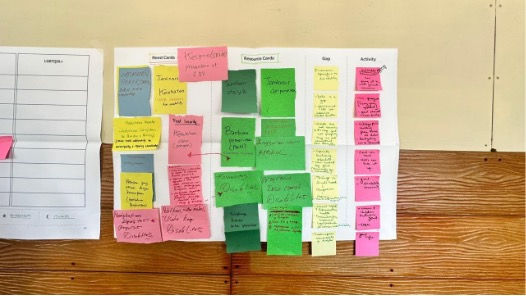
In Indonesia’s disaster-prone Mount Merapi region, we supported Yakkum Emergency Unit (YEU) and CIQAL to develop an inclusive disaster preparedness model. This innovation directly addressed the exclusion of persons with disabilities (PWDs) by creating a real-time database, a community-owned evacuation SOP, and a local advocacy group. Unique for its leadership by PWDs, the system ensured solutions reflected lived experience. With CLIP mentoring, the project explored scaling pathways—from integration into local governance to replication in neighbouring villages—anchored in procedural humility and sustainable community ownership.